
The Fretboard Atlas · Desk mat

Every bit of guitar theory, on one desk.

Chords, keys, scales, the circle of fifths and every note on the neck. Look down mid-practice and the answer is there.

$29launch price
9.25 × 7.75 in42 chord shapesAll 12 keys
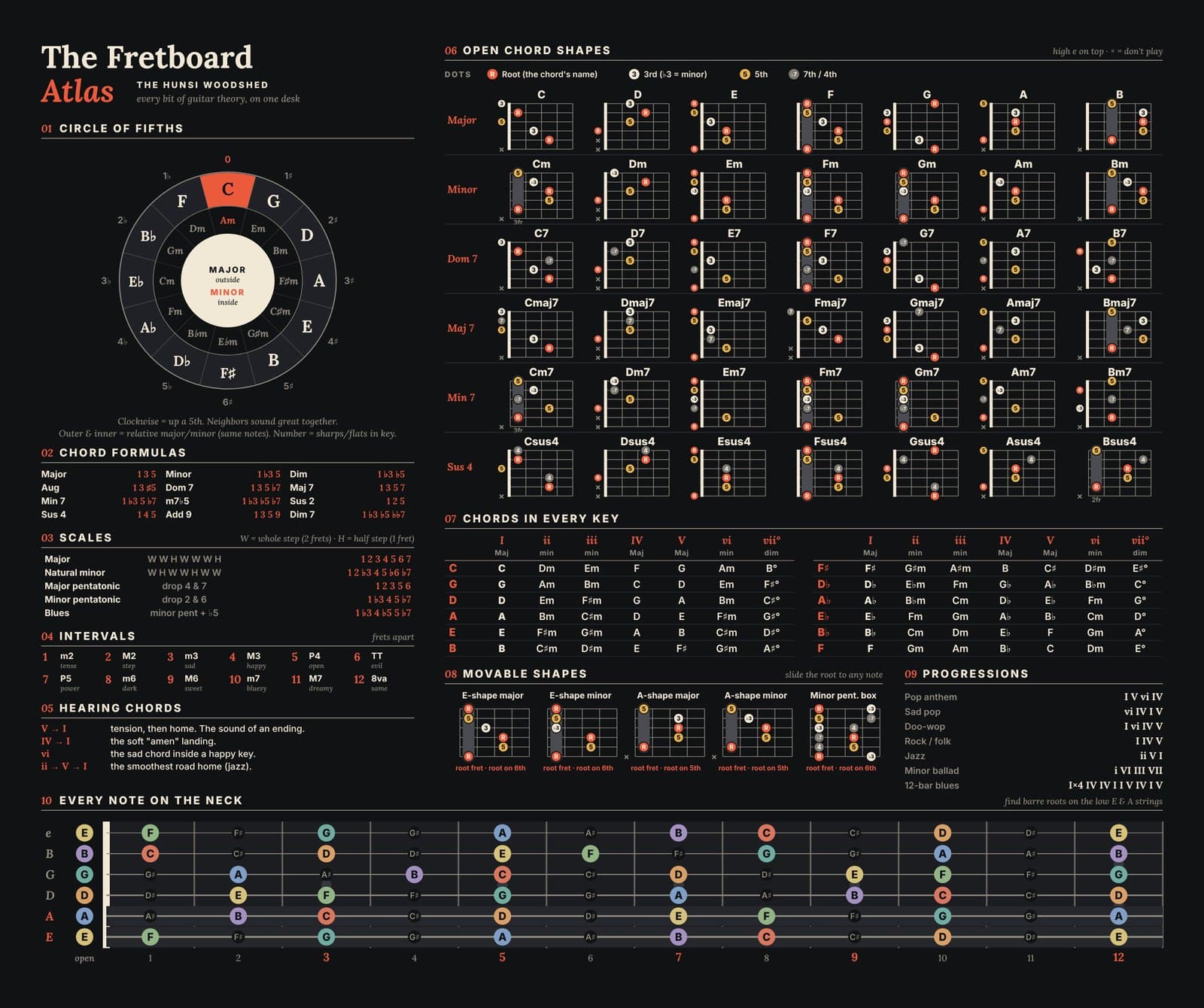
The Fretboard Atlas desk mat: circle of fifths, 42 chord shapes, chords in every key, scales, intervals and a full fretboard map on black.
Ten sections. One mat. No tabs open.

What's on it

Ten sections, numbered the way they're printed.

Start anywhere. Each section answers a question you'd otherwise stop practicing to look up.

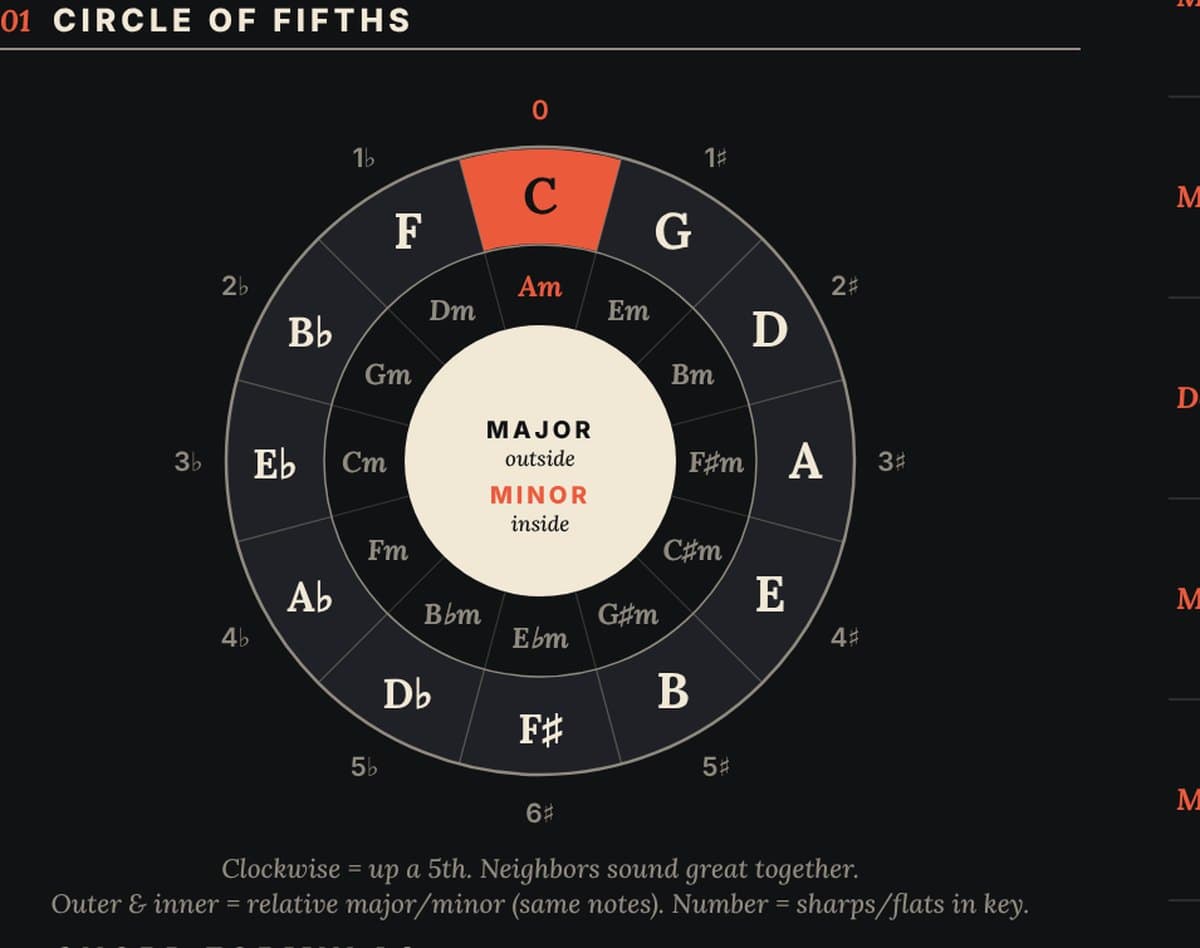
  1. 01Circle of fifthsEvery key, its relative minor, and how many sharps or flats it has.
  2. 02Chord formulasWhat makes a chord major, minor, 7th, sus or diminished.
  3. 03ScalesMajor, minor, both pentatonics and blues, with the whole and half steps.
  4. 04Intervals1 to 12 frets apart, and what each distance sounds like.
  5. 05Hearing chordsV to I, IV to I, the sad vi. The moves your ear should learn first.
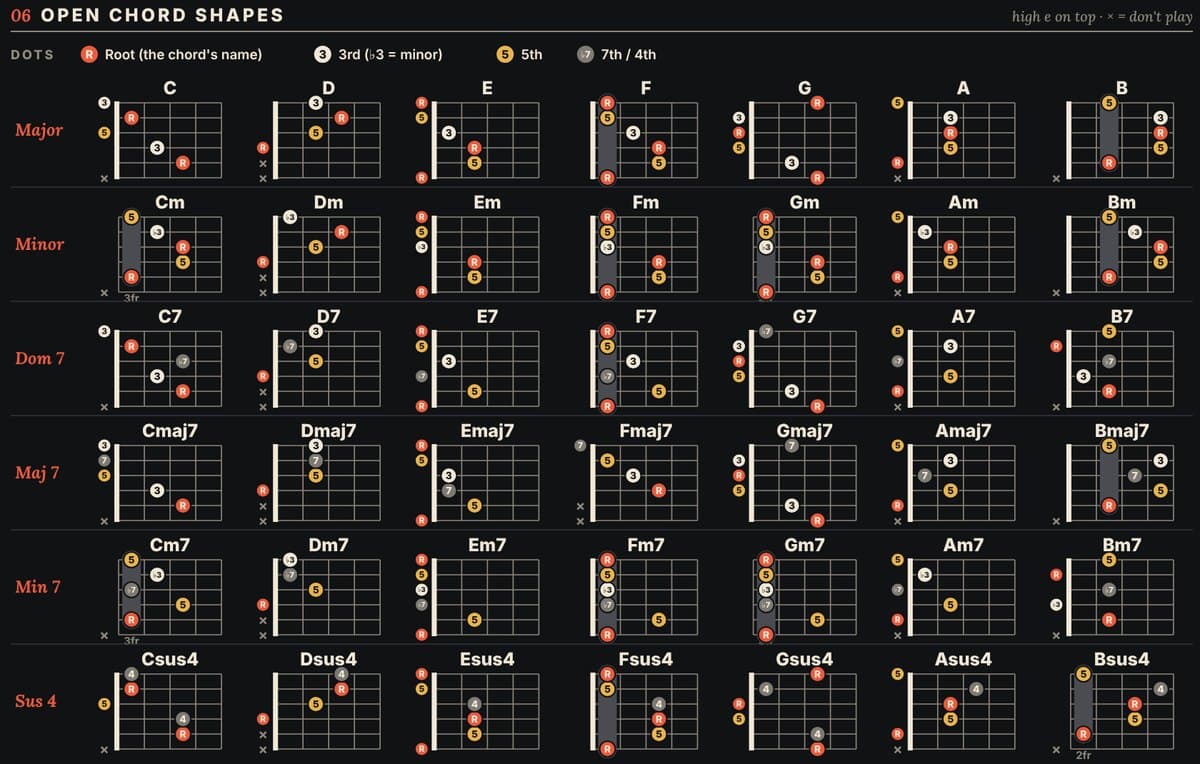
  6. 0642 open chord shapesMajor, minor, 7, maj7, m7 and sus4 in every natural key.
  7. 07Chords in every keyAll 12 keys, with the Maj, min, min, Maj, Maj, min, dim pattern.
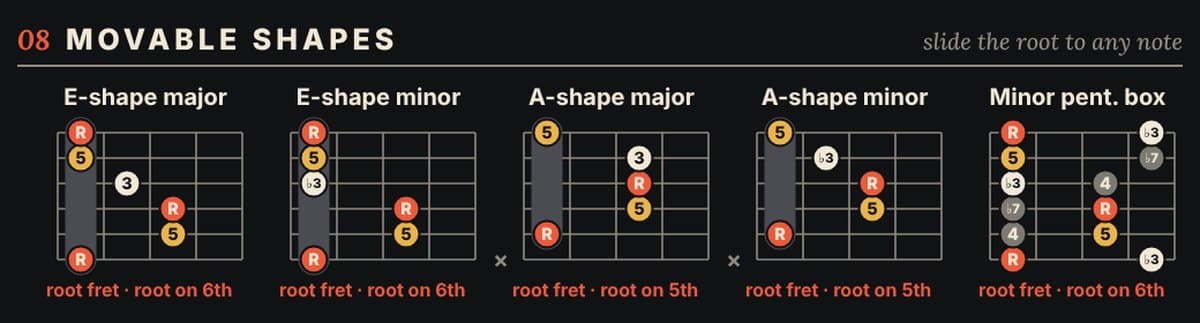
  8. 08Movable shapesE-shape and A-shape barre chords plus the minor pentatonic box.
  9. 09ProgressionsThe handful of patterns behind most songs you know.
  10. 10Every note on the neckOpen to the 12th fret, each note in its own color.
C major, drawn the way the Atlas draws itC35×R3ReE

How to read it

Every dot tells you what it's doing.

Most chord charts show where to put your fingers. The Atlas also shows why the chord sounds the way it does.

  • R
    RootThe note the chord is named after. Find it and you can move the shape anywhere.
  • 3
    3rdDecides happy or sad. A ♭3 makes the chord minor.
  • 5
    5thThe power under the chord. It's half of a power chord.
  • 7
    Extras7ths and 4ths add color: bluesy, dreamy, or suspended.

Up close

Printed for reading at a glance.

The woodshed

To woodshed: to go practice until you get good.

I'm Sean. I'm learning guitar and piano in public, and I kept stopping practice to look the same things up. So I put them on the desk in front of me.

The Hunsi Woodshed is where I turn what actually helped me into tools you can use. Nothing here is theory for its own sake. Each piece earned its spot by getting me unstuck.

  • Find the root first. Once you know where it is, every barre shape becomes movable.
  • Same chords, both instruments. Learning C, Am, F, G everywhere made it all transfer.
  • Five minutes of freestyle, every session. You build it by doing it badly daily.
  • Hear it before you name it. Find home, then major or minor, then the chords.

Follow along on @seanhunsimusic.

Questions

Before you buy

Is this for beginners?

Yes. The chord shapes and the neck map are useful from day one, and the theory sections are there when you're ready for them. It also covers what intermediate players look up most: keys, intervals and movable shapes.

What tuning is it for?

Standard tuning (E A D G B E), drawn for right-handed players with the high e string on top, the same way tab reads.

Why do the dots have letters and numbers?

Each dot shows its job in the chord: R for root, 3 for the third, 5 for the fifth, and 7 or 4 for extras. It's how you start seeing why chords sound the way they do.

How big is it?

9.25 × 7.75 inches. It's a full-size mouse pad that sits next to your keyboard or on a music stand shelf.

When will it ship?

Each mat is printed to order. Shipping times are shown at checkout.